
Skip to content
Home » Spanish Learning Journey (Beginner → GCSE) » Page 3

Spanish Learning Journey (Beginner → GCSE)

Work in Spain

How Spanish Can Supercharge Your Career (And Make Work More Fun!)

If you’re looking for a way to boost your career prospects, learning Spanish might just be one of the smartest moves you can make. With over 500 million speakers worldwide, Spanish is the second most spoken language by native speakers and a valuable skill in today’s job market. Whether you want to stand out to employers, open doors to international opportunities, or simply make your daily work life easier, Spanish can give you the edge.

Read More »How Spanish Can Supercharge Your Career (And Make Work More Fun!)

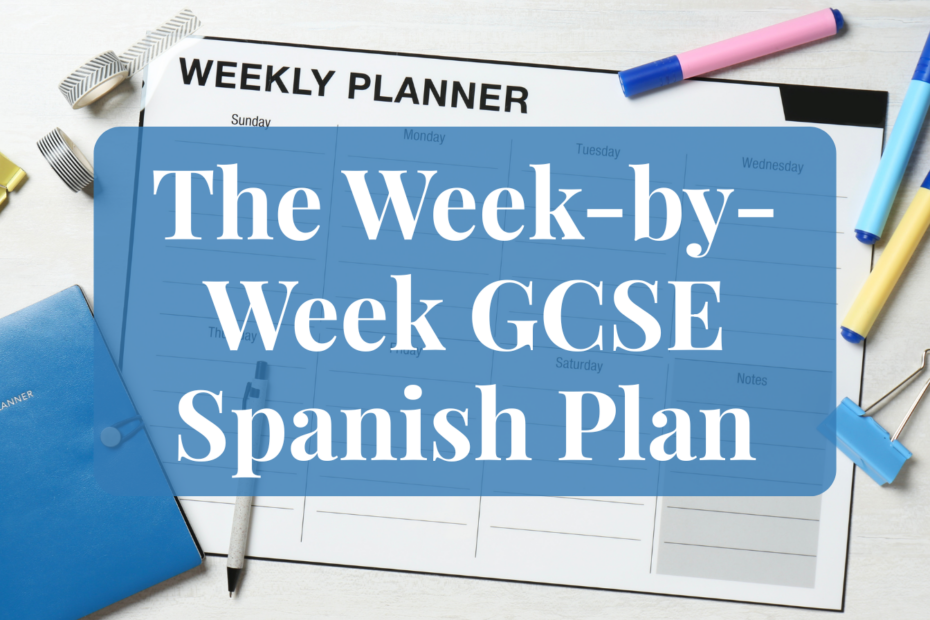
Weekly GCSE Spanish revision schedule covering vocabulary, listening, speaking and writing

The Ultimate GCSE Spanish Revision Plan

I still remember the first time I had to order food entirely in Spanish, years ago, travelling in South America. My grammar wasn’t perfect — nowhere close, honestly — and I definitely got a few verb endings wrong. But I got the food, and I realised something that’s shaped how I teach ever since: communication matters more than perfection. That’s exactly the mindset that separates students who cram vocabulary lists and still freeze in the exam from students who actually improve.

Read More »The Ultimate GCSE Spanish Revision Plan
How to say the food is great in Spanish

7 Ways to Compliment Food in Spanish (From Someone Who’s Eaten a Lot of It)

Food is serious business in Spanish-speaking cultures. I learned this early on in Argentina, where a meal isn’t just something you eat — it’s something you experience, discuss, and pay proper attention to. An asado (barbecue) in Mendoza isn’t done until everyone has commented on the meat, the wine, and ideally both several times. Getting the compliments right matters.

Over twenty years of eating my way around South America, these are the seven phrases I’ve used most — and the ones I hear most often from native speakers when food is genuinely good.

Read More »7 Ways to Compliment Food in Spanish (From Someone Who’s Eaten a Lot of It)
Spanish future conditional tense

Master the Future Conditional: Write Your New Year’s Resolutions in Spanish

The start of a new year is the perfect time to dream big and set goals, and what better way to do it than in Spanish? Whether you’re learning the language or just looking for a fun twist on your resolutions, the future conditional tense (el condicional simple) is the perfect tool to help you express what you would do in the year ahead. Let’s break it down and build your resolutions list, step by step!

Read More »Master the Future Conditional: Write Your New Year’s Resolutions in Spanish
Student preparing for GCSE Spanish exam with revision notes and headphones

10 Things You Can Do to Ace Your Spanish GCSE and iGCSE Exam

I’ve been preparing students for their GCSE and iGCSE Spanish exams for 10 years — home educated students, schooled students, and everyone in between. In this post I’m sharing my top tips on how to get the best grade possible: the specific things that actually make a difference, not generic study advice you could find anywhere.

Read More »10 Things You Can Do to Ace Your Spanish GCSE and iGCSE Exam
after school spanish lessons

How effective are After-School Programmes at Complementing Regular School Education?

After-school programs offer a wealth of benefits that enhance and complement regular school education. By providing an enriching environment that extends beyond the traditional classroom, these programs support academic growth, social development, and personal well-being. Here’s how:

Read More »How effective are After-School Programmes at Complementing Regular School Education?
Teenager practising spoken Spanish confidently for GCSE speaking exam

How does my child achieve a grade 7 in GCSE Spanish?

I had a student a couple of years back — bright, capable, doing everything “right” on paper. Flashcards every night, a revision timetable stuck to her wall, past papers ticked off one by one. She came to me convinced she was on for a 5, maybe a 6 if she was lucky. She got a 7. When I asked her what she thought had actually shifted, she didn’t say “I did more flashcards.” She said, “I stopped being scared to just talk.” That’s the bit that doesn’t fit neatly into a revision checklist, and it’s the bit that actually makes the difference between a 5 and a 7.

Read More »How does my child achieve a grade 7 in GCSE Spanish?
Home-educated student studying for GCSE Spanish exam boards including AQA and Edexcel

GCSE Spanish Exam Boards Explained: AQA vs Edexcel vs iGCSE

A few years ago I had a lovely home-ed family come to me halfway through Year 10, panicking slightly, because they’d registered their daughter for an exam centre that only offered AQA — and she’d already done a term and a half of work built around Edexcel’s topics. Nobody’s fault, really. Nobody had told them the exam boards weren’t interchangeable. We got her sorted (it meant a slightly rushed few weeks filling gaps in the AQA-specific topics), but I remember thinking: this is exactly the kind of thing that should be sorted out before you start, not three-quarters of the way through.

So let’s actually get into it — properly, not just “here are three logos and a summary.”

Read More »GCSE Spanish Exam Boards Explained: AQA vs Edexcel vs iGCSE

Alternatives to A-Levels for language learners

A-level-students2

A-Level results are out this week.  I didn’t take A-Levels, so don’t feel qualified to discuss the stress, anxiety but also overwhelming joy that getting your results must bring.  (GCSE’s were bad enough for me). It has made me contemplate however the alternatives that are available for language learners. Read More »Alternatives to A-Levels for language learners