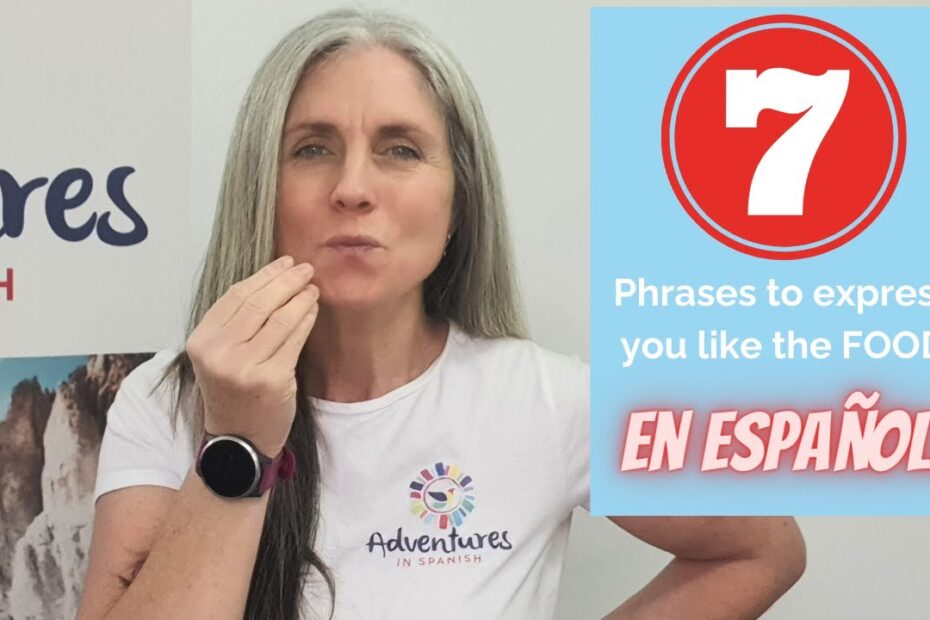
Food is serious business in Spanish-speaking cultures. I learned this early on in Argentina, where a meal isn’t just something you eat — it’s something you experience, discuss, and pay proper attention to. An asado (barbecue) in Mendoza isn’t done until everyone has commented on the meat, the wine, and ideally both several times. Getting the compliments right matters.
Over twenty years of eating my way around South America, these are the seven phrases I’ve used most — and the ones I hear most often from native speakers when food is genuinely good.

1. ¡Qué rico!
Your most versatile, go-to food compliment. It translates literally as “how delicious!” but it’s used constantly — at the table, walking past a bakery, taking a first bite of something unexpectedly good. You’ll hear it everywhere from Buenos Aires to Barcelona.
Pronunciation note: roll that r — rrrico — it’s one of those sounds that makes a real difference to how natural it sounds. Don’t worry if it takes practice; every Spanish speaker appreciates the effort.
When to use it: absolutely any positive food situation. It’s the Spanish equivalent of “this is amazing” — natural, enthusiastic, impossible to overuse.
2. Me encanta
Literally “it enchants me” — which tells you something about how Spanish handles enthusiasm. Me encanta means “I love it” and it carries genuine warmth without being over the top.
I used this constantly in Mendoza, particularly at wine tastings where ¡qué rico! felt slightly casual for a Malbec that had genuinely moved me. Me encanta hits a slightly more considered note — still enthusiastic, but with a touch more depth.
When to use it: when you want to express real appreciation rather than just surprise. Works for food, wine, a coffee, a dessert — anything you’d genuinely say you love.
3. Está buenísimo/a
Bueno means good. Buenísimo means exceptionally, extraordinarily good — the -ísimo suffix in Spanish is a superlative intensifier, and it’s deeply satisfying to use.
One grammar note worth knowing: buenísimo agrees with the gender of what you’re describing. Describing a masculine noun (el pollo — the chicken)? Está buenísimo. Feminine noun (la ensalada — the salad)? Está buenísima. Getting this right is one of those small details that makes a native speaker notice you’ve actually been paying attention.
When to use it: for food that’s genuinely exceeded expectations — a step up from ¡qué rico! in terms of emphasis.
4. Es espectacular
Save this one. Not every meal is spectacular, and if you use espectacular for an ordinary sandwich it loses its power. But when a dish genuinely stops you mid-conversation — the kind of meal where you pause, look at the plate, and reach for something bigger than “delicious” — es espectacular is exactly right.
I first used it at a restaurant in Buenos Aires where the bife de chorizo (sirloin steak) arrived and the table went quiet. It was the only appropriate response.
When to use it: sparingly — for the meals you’ll actually remember.
5. Está exquisito/a
More formal and refined than the others — exquisito implies something crafted with care and skill, not just food that happens to taste good. You’d use it at a proper restaurant rather than a street food stall, and it tends to land particularly well with a host who’s cooked for you at home and clearly put real effort in.
Same gender agreement rule as buenísimo — exquisito for masculine, exquisita for feminine.
When to use it: at sit-down restaurants, at someone’s home, anywhere the occasion calls for something slightly more considered than ¡qué rico!
6. Está para chuparse los dedos
This is the one that gets a reaction. Literally “it’s for licking your fingers” — the Spanish equivalent of “finger-licking good” — and it’s colourful enough that native speakers always appreciate hearing it from a non-native.
It’s informal, affectionate, and works best in relaxed settings — a family lunch, a casual dinner with friends, anywhere that a formal compliment would feel out of place. I’ve used it at Argentine barbecues and in Spanish market stalls and it always lands well.
When to use it: informal settings, enthusiastic situations, anywhere you want to make someone laugh as well as feel appreciated.
7. ¡Qué buena pinta!
I’m swapping out es perfecto from the original list for this one, because it’s far more useful in practice. ¡Qué buena pinta! means “it looks amazing!” — and it’s what you say when the food arrives at the table before you’ve tasted it.
It’s the phrase that comes out when a plate lands in front of you and you genuinely react to how it looks. Pinta refers to the appearance of something, and ¡qué buena pinta! is one of those phrases you’ll hear at every table in Spain and Latin America — and one that immediately signals you know your way around a Spanish-speaking dining room.
When to use it: the moment food arrives. Before you’ve even picked up your fork.
And One More Worth Knowing: ¡Buen provecho!
Strictly speaking this isn’t a compliment — it’s closer to bon appétit in French — but it deserves a mention because it’s one of the most culturally important food phrases in Spanish and one that catches many learners off guard.
You say ¡buen provecho! when someone starts eating, when you pass someone eating in the street, when a waiter brings your food. In Argentina, Mexico, Spain — everywhere — it’s the standard acknowledgement that someone is about to eat, and not saying it when the occasion calls for it is the kind of small omission that marks you out as someone who hasn’t spent much time around Spanish-speaking tables.
It costs nothing to say and it always lands warmly.
Hear Them in Action
Knowing the phrase is one thing — saying it with the right intonation is what makes the difference between sounding natural and sounding like you’ve memorised a list. I’ve put together a short YouTube lesson so you can hear exactly how these sound in spoken Spanish. Watch it here.
Take These Phrases Further
Food and language are deeply connected in Spanish-speaking cultures — and one of the best ways to practise phrases like these in a real context is our Spanish cooking experience in Málaga, where you’ll spend an afternoon cooking with a professional Spanish chef, learning the vocabulary as you go, and using it in a real kitchen rather than a classroom.
If you’d prefer to build your confidence from home first, our adult Spanish classes run throughout the year — online and in North Wales — with small groups and real conversation practice from day one.
¡Buen provecho!
