I’ve been preparing students for their GCSE and iGCSE Spanish exams for 10 years — home educated students, schooled students, and everyone in between. In this post I’m sharing my top tips on how to get the best grade possible: the specific things that actually make a difference, not generic study advice you could find anywhere.
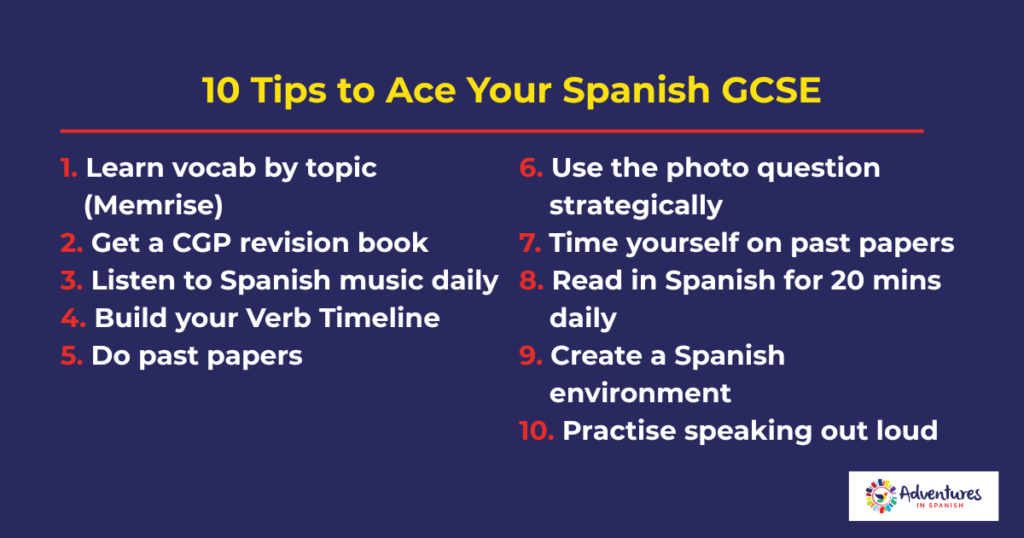
1 – Learn the vocab
Most people go to Duolingo for their vocab, but I’d say check out Memrise instead — you can work topic by topic, you don’t have to go back to the beginning if you don’t finish one, and you can actually find AQA-specific vocab as well as Edexcel Pearson vocab, which matters since the topic lists aren’t identical between boards. (If you’re still deciding which exam board fits your child, I’ve written a full breakdown here.)
2 – Buy a great revision book
The CGP books are fabulous because they cover all the grammar you need for a great mark. The topics in the AQA books are slightly different from the Edexcel and Cambridge ones, but don’t let that put you off — they still cover the broad topic areas well. The main reason I like these is genuinely the grammar coverage.
3 – Listen to Spanish music
Two ways to do this: have it on as background music while studying (it’s not distracting the way English lyrics would be), or listen properly, headphones in, all the time. My advice — pick 2 or 3 artists and stick with them rather than jumping around. You’ll get used to their pronunciation, which makes the vocabulary in their songs easier to follow. Pick out key phrases, look up the lyrics, translate them — that builds your vocabulary bank and helps your listening skills at the same time.
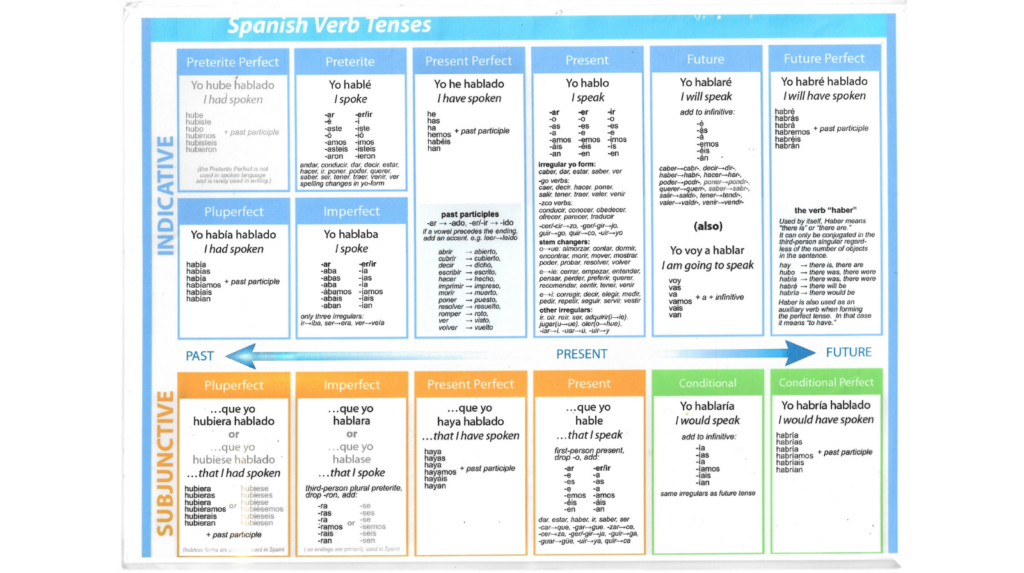
4 – Learn your tenses
With my students, we build a Verb Timeline together — as we learn a new tense, it goes on the timeline, so eventually every tense is laid out in one place rather than scattered across different topics. (I go into this properly, along with a full week-by-week revision structure, here.)
5 – Past papers
Practise doing past papers, especially for the writing exam — you need to cover different tenses within your answer. At the top of the writing question, list the tenses you want to include, and use 2 or 3 different subjects (the “I,” the “we,” and “them” forms, for example). Tick them off as you write, so you know you’ve covered everything the question needs.
6 – The photo question
In the oral exam, you’ll get to prepare a photograph to take in with you. My advice: choose the topic you find hardest for this one. You can memorise exactly what you’re going to say about the image, plus likely follow-up answers — and once you’ve used that topic as your photo card, it won’t come up again for the rest of the oral exam. It’s a genuinely useful way to take a bit of control over the exam. (For more on why the speaking exam matters more than people realise, read this.)
7 – More past papers
Do as many as you can, and time yourself doing the questions. Understanding how much time you actually need — and how the questions are typically formed — means no surprises on exam day.
8 – Read in Spanish
Same principle as the music — it’s all about vocab. Set a timer for 20 minutes a day if you can manage it (15 is fine too), grab a book, article, or bilingual children’s book, and read. Note any new vocabulary as you go. It adds up faster than you’d expect.
9 – Create a Spanish learning environment
If you can immerse yourself in Spanish generally, especially in the run-up to the exam, everything starts to feel more familiar rather than like exam pressure. Try switching your phone or satnav to Spanish, look at food menus in Spanish, even try cooking or baking with a Spanish-language recipe. Small, constant exposure adds up.
10 – Practise, practise, practise
My last tip: practise speaking, out loud, with anyone you can. A friend also sitting Spanish GCSE, a family member, anyone willing to ask you questions back. The more real conversation practice you get before the exam, the less intimidating the real thing becomes.
If you’d like support with any of this, our GCSE and iGCSE Spanish courses cover exactly this kind of structured preparation — group classes and after-school support both available. If exams are coming up soon, our Spanish Summer School runs GCSE-specific sessions during July — small groups, live online, designed specifically to build speaking confidence before results day. And if you’re still working out whether GCSE Spanish is the right path for your home-educated child, start here.
Which of these ten would make the biggest difference for your child right now?
If you’d like to see some of these tips in action, I’ve also put together a short video walkthrough — particularly useful for the oral exam preparation tips: Watch on YouTube below.