Can’t tell if your home educated child is learning Spanish? Here are seven real signs of progress, simple ways to track it without turning home ed into school, and when to get extra support.
My eldest hadn’t said a word of Spanish in months.
We’d moved back to the UK after twenty years in South America, and somewhere between the North England drizzle and a whole new routine, her Spanish just… went quiet. I’ll be honest — I worried. Had she lost it? Had all those years in Argentina simply drained away?
Then we set off on our first backpacking trip to Spain together. We got to the airport, she heard the people around us chatting away in Spanish — and she started talking. Just like that!! No warm-up, no nudging from me. It had been there the whole time, waiting for a reason to come out.
So if you’re wondering whether your home educated child is improving in Spanish, here’s my honest answer: look less at what they can recall when you quiz them, and more at what they understand, what they use without being asked, and whether they can get a simple message across. Progress in a language is often quiet long before it’s loud.
I’ve spent over 20 years living and working across Argentina, Venezuela, Colombia Ecuador and Peru, and more than 12 years teaching Spanish — and that quiet-then-suddenly pattern comes up again and again. Here’s what to look for (and what to do when you can’t see it yet).
Why It Feels Like Your Child Isn’t Improving
You’ve done colours, numbers, a few songs. One day your child knows the lot. The following week you ask something simple and they look at you as if you’ve started speaking Martian.
Sound familiar?
That’s not going backwards — it’s how memory works. Words get learnt, half-forgotten, met again and then they stick. And children nearly always understand far more than they can say. There’s even a name for that quiet stage (the silent period), and my eldest was a textbook example of it — I’ve written more about why children understand Spanish but won’t speak it here
If you’re raising your children with Welsh and English, you’ll know this already — the child who follows every word at Cylch Meithrin and then answers you in English. Spanish works exactly the same way.
The trouble is, most of us measure progress the way school taught us to: a quick quiz, right or wrong. In a language, that’s measuring the wrong thing.
7 Signs Your Child Is Making Progress in Spanish

1. They understand more than they can say
You say siéntate at lunch and they sit down — no translation, no fuss. You ask them to escucha and they stop and listen. They might not say a word back yet, but they’ve understood, and that’s the foundation everything else is built on.
2. They use Spanish without being asked
This is one of my favourites. They count their Lego in Spanish. They hum a song from weeks ago. They say gracias to the dog. When Spanish pops out with no prompting from you, it’s becoming theirs.
3. They put words together to say something real
Quiero agua. Me gusta. ¿Dónde está el gato? Once your child starts stringing words together to say what they want, they’ve moved from remembering to communicating. Half Spanish, half English still counts — they built that sentence themselves.
4. They spot familiar words somewhere new
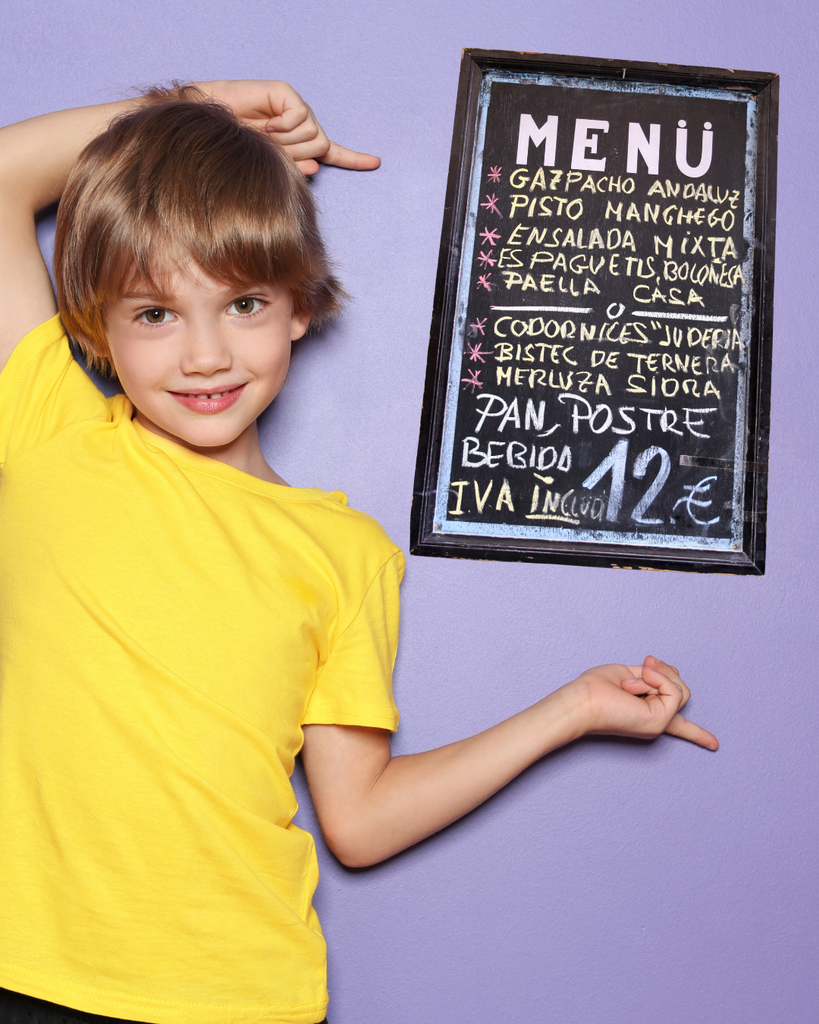
They learnt manzana in a lesson, then point it out on a menu or in a story. Using a word outside the activity where they met it is a big step — it means the Spanish is becoming useful, not just memorised for Tuesday.
5. They ask “how do you say…?”
A child who wants to know the Spanish for something is a child who’s started thinking in two languages. Answer it, every time (and look it up together if you don’t know!).
6. They keep going when they don’t understand
Instead of freezing, they try a ¿cómo? or otra vez, por favor — or just have another go with gestures. That bit of grit matters more than a perfect sentence, especially for older children heading towards GCSE.
7. They start tuning into sounds and accents
Here’s a slightly naive moment of mine. I’d learnt my Spanish the mainland Spain way, so when I arrived in Venezuela I was saying gracias with that lispy “th” — grath-ias. Nobody around me said it like that (across Latin America it’s an “s”). I hadn’t got it wrong, exactly… I just sounded like I’d stepped out of a Madrid textbook. So I listened, and adjusted.
Children do this too. They notice that the character in a cartoon sounds different from their teacher, or they start copying a sound they’ve heard. That’s their ear doing the work — and it’s real progress.
What Progress Looks Like at Each Stage
Progress at 7 looks very different from progress at 14 — and a beginner at 12 needs a different starting point from a 12-year-old who’s been learning for years. That’s why my home ed classes are split by age and experience:
| Course | Who it’s for | Ages |
|---|---|---|
| First Steps | Key Stage 2 beginners | 6–11 |
| Trail Blazers | Key Stage 2 improvers | 7–11 |
| Pathfinders | Key Stage 3 beginners | 11–14 |
| Voyagers | Key Stage 3 improvers | 11–14 |
| Navigators | Pre-GCSE | 12+ |
| Pioneers | GCSE | 14+ |
I’ve just received a thank-you card from a student who was in my home ed classes for two years. She started secondary school this September, straight into Year 10, and wrote to tell me how pleased she is with her level — and how much she’d learnt and enjoyed the classes. Honestly? That’s the kind of progress I care about. Not a perfect score on a Tuesday, but a young person walking into a brand-new school feeling confident in her Spanish.
Have a look at the Spanish Explorers home ed courses to see where your child might fit.
How to Track Spanish Progress Without Turning Home Ed Into School
One of the joys of home education is that you don’t need a test for everything. But a simple way of noticing progress is really reassuring — especially on the weeks when it feels like nothing’s going in.
Keep a tiny progress journal. A notebook, a note on your phone, even a quick voice memo. Every few weeks, jot down one thing your child can do now that they couldn’t before. For example, they can:
- follow a few Spanish instructions
- say their name and age
- ask for something they want
- spot Spanish words in a story
- answer a simple question without help
Looking back over a few months of those little notes is wonderfully encouraging (for you as much as them!).
Notice what happens outside the lesson. A word recognised on holiday. An attempt at ordering in a café. A phrase picked up from a Spanish cartoon. Those are the moments I love hearing about from parents — they’re proof Spanish is becoming part of your child’s world.
Count confidence as well as accuracy. Grammar and pronunciation matter more and more as children head towards GCSE. But a child who’s willing to have a go, ask a question and recover when they get stuck has the skill that makes all the rest usable.
Expect wobbles. Some weeks they’ll remember everything, some weeks nothing. That’s consolidation, not failure — keep Spanish around, keep it fun, and give it time.
If you’d like some ready-made activities to spot these milestones at home, have a look at our free Spanish resources
Signs It’s Time to Get Some Outside Support
Plenty of families get a lovely start with Spanish at home. But there often comes a point where a parent and a bundle of flashcards can only go so far. A few signs you might be there:
- The same words, month after month. Colours and numbers are solid, but nothing new is going in.
- Nobody to talk to. Your child has no one to actually use their Spanish with — and a language needs someone on the other end.
- You’re not sure about the sounds. If you don’t speak Spanish yourself, it’s hard to know whether pronunciation is on track (remember my lispy gracias!).
- Your child wants more. They’re asking questions you can’t answer, or getting bored with the basics.
- GCSE is on the horizon. From around 12, a clear plan really helps — that’s what Navigators and Pioneers are for.
That’s where my home ed classes come in. They’re live, online, and taught by someone who learnt her Spanish in real kitchens, markets and playgrounds across South America — not just from a textbook. Children work at the right level for their age and experience, from First Steps right through to GCSE.
Find out more about Spanish for home educated children
Frequently Asked Questions
How long until my child can hold a basic conversation in Spanish?
I wish I could give you a number — but honestly, it depends. Age, how often your child hears Spanish, whether they have someone to speak it with, and their confidence all make a huge difference. Rather than watching the calendar, watch for the seven signs above.
What level should my home educated child be at?
There’s no set level home educated children have to reach. What matters is that they’re moving forward from wherever they started. The Spanish Explorers stages above are a useful rough guide by age and experience.
Can home educated children take GCSE Spanish?
Yes! Home educated children sit GCSE Spanish as private candidates at an exam center. I help families find a center, and I prepare students for the exam itself through Pioneers, our GCSE course. Read more about GCSE Spanish here
The Milestone That Really Counts
The aim isn’t a child who can recite a list of Spanish words. It’s a child who feels comfortable using Spanish to connect with other people.
Sometimes that shows up in a lesson. Sometimes it waits for an airport in Spain.
So — what’s the last bit of Spanish your child came out with when you weren’t expecting it? Tell me in the comments, I’d love to hear!!