
Ten niche animals native to South America, from Argentina’s pink fairy armadillo to the pudú and maned wolf, with their Spanish names and Kelly Thornhill’s stories from twenty years in South America.

The guides in Venezuela didn’t ask whether I wanted an anaconda draped round my neck. One minute we were trudging through the sabana on a camping trip, the next there was several metres of very heavy, very unimpressed snake on my shoulders – and somebody shouting ¡foto, foto!
I first wrote this post back in 2015, when I was researching animals for a bilingual children’s book with storyteller Jude Lennon. Two years later (November 2017!!) it came out as ¡Fernando Baila el Tango! – the story of Valentina, a flamingo desperate to tango in Buenos Aires, packed with Argentine animals along the way. You’ll find it on our Bilingual Books page. And I’ll be honest – my original list was a bit… obvious. Toucans. Piranhas. The animals on every nature documentary going. Worse, I’d listed the Southern right whale as “unique to South America” – it isn’t! It breeds off South Africa, Australia and New Zealand too. Twenty years living across Argentina, Venezuela and Colombia and I still got that one wrong (oops).
So here’s the list I should have written – ten genuinely niche animals native to South America, with their Spanish names, because half the fun is what the locals call them. The famous ones I actually met are further down.
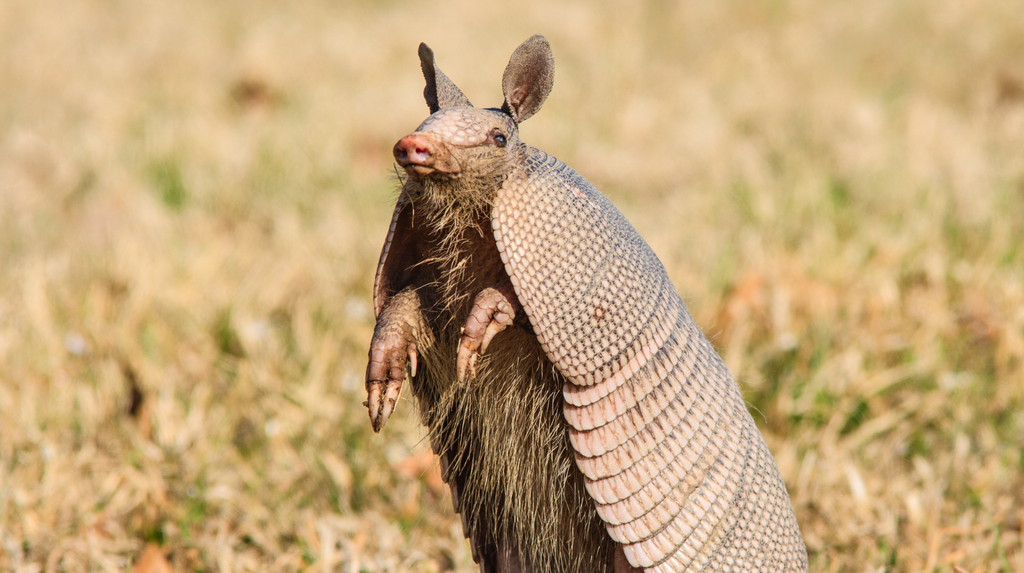
1. Pink fairy armadillo – pichiciego
The smallest armadillo in the world – about 10 cm long and lighter than an apple. It’s pale pink, its shell is only attached along its spine (like a cape!), and it spends nearly all its life underground in the sandy plains of central Argentina. Including Mendoza, where I ran Grapevine Wine Tours. [Kelly: ever see one, or meet anyone who had? Most mendocinos never have.] Pichiciego roughly means “little blind one” – ciego is blind.
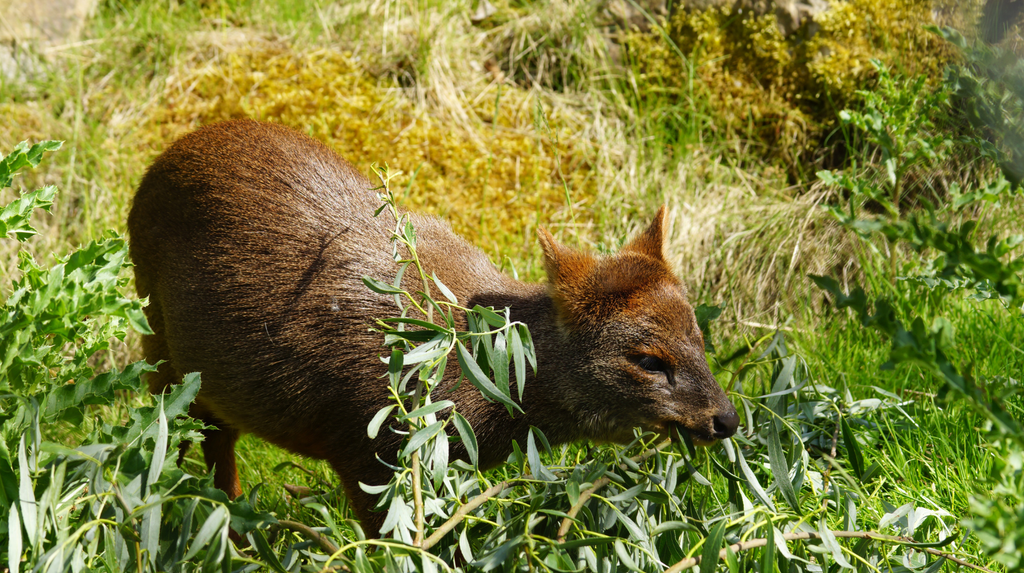
2. Pudú – pudú
The smallest deer in the world, about knee-high on an adult (35–45 cm at the shoulder). The southern pudú lives in the cold, wet rainforests of southern Chile and Argentina and is so shy you’re more likely to see one in a rescue centre than in the wild.
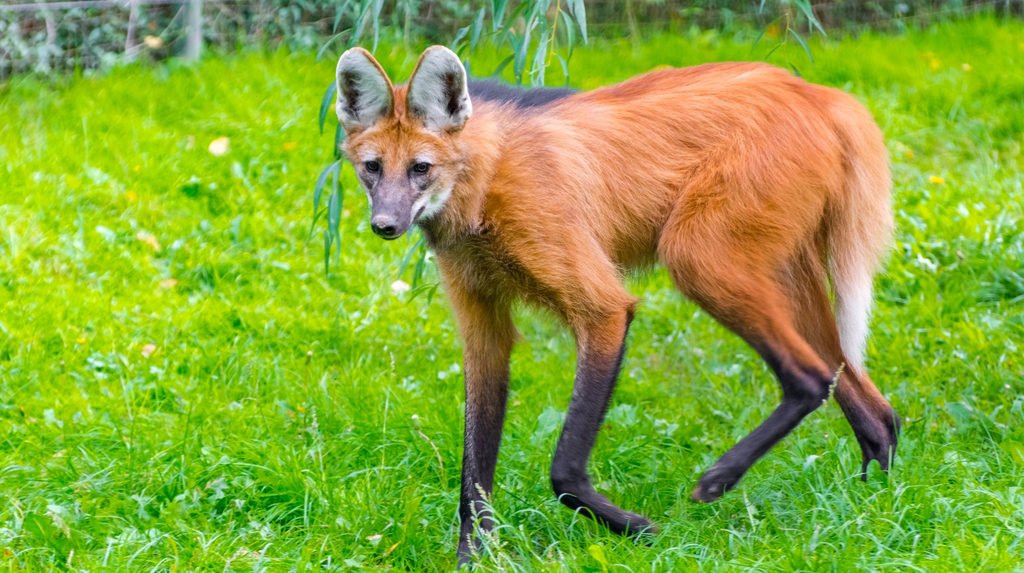
3. Maned wolf – aguará guazú
Looks like a fox on stilts – and it’s neither a fox nor a wolf. It’s the tallest wild dog in South America (around 90 cm at the shoulder), with those long legs for seeing over tall grassland in Brazil, Paraguay, Bolivia and northern Argentina. Aguará guazú is Guaraní for “big fox”. And half its diet is fruit, which nobody expects!

4. Darwin’s frog – ranita de Darwin
Charles Darwin spotted this tiny frog in Chile on his voyage in the 1830s. The dads swallow the eggs into their vocal sac, the tadpoles grow in there, and weeks later Dad basically coughs up fully formed little frogs. Ranita = little frog (rana + -ita, the Spanish “little” ending you’ll hear everywhere – cafecito, ahorita…).
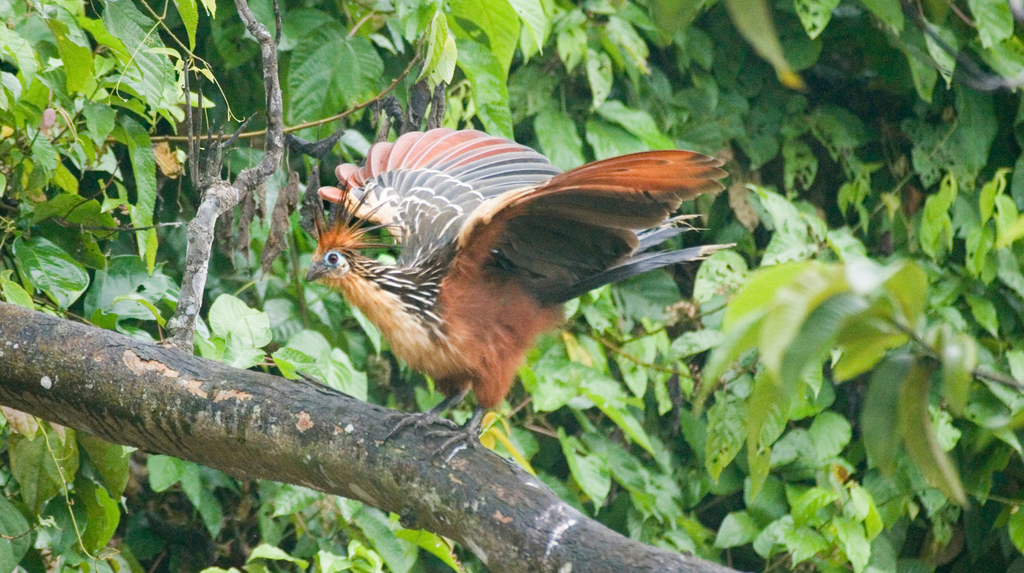
5. Hoatzin – hoatzín (or chenchena in Venezuela)
A punk-haired bird from the Amazon and Orinoco rivers that digests leaves like a cow – and smells like it too, hence its English nickname, the stinkbird. The chicks have little claws on their wings so they can scramble back up the branches if they fall in the water. Dinosaur vibes!!
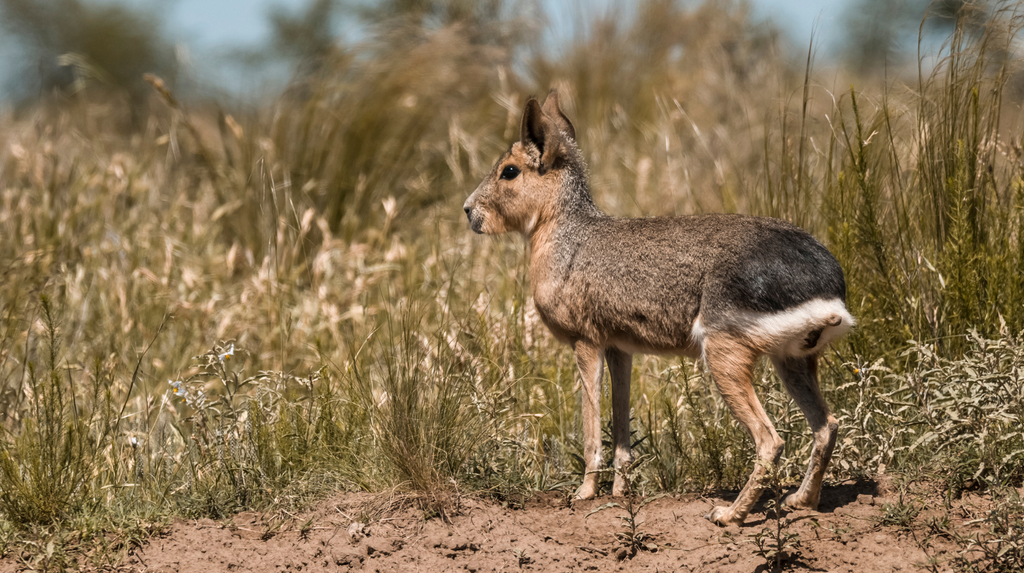
6. Patagonian mara – mara or liebre patagónica
Only found in Argentina. It looks like someone crossed a hare with a small deer – but it’s actually a giant rodent, a cousin of the guinea pig. Maras pair up for life. They live in the dry scrub and steppe of central and southern Argentina – and I saw mine at Parque Luro in La Pampa, half an hour from Santa Rosa. It’s an old hunting estate with a white “castle” (El Castillo) sitting in the middle of a caldenal – a forest of caldenes, the tough, twisty native trees of the pampas. Not where you’d expect to bump into a giant guinea pig!!
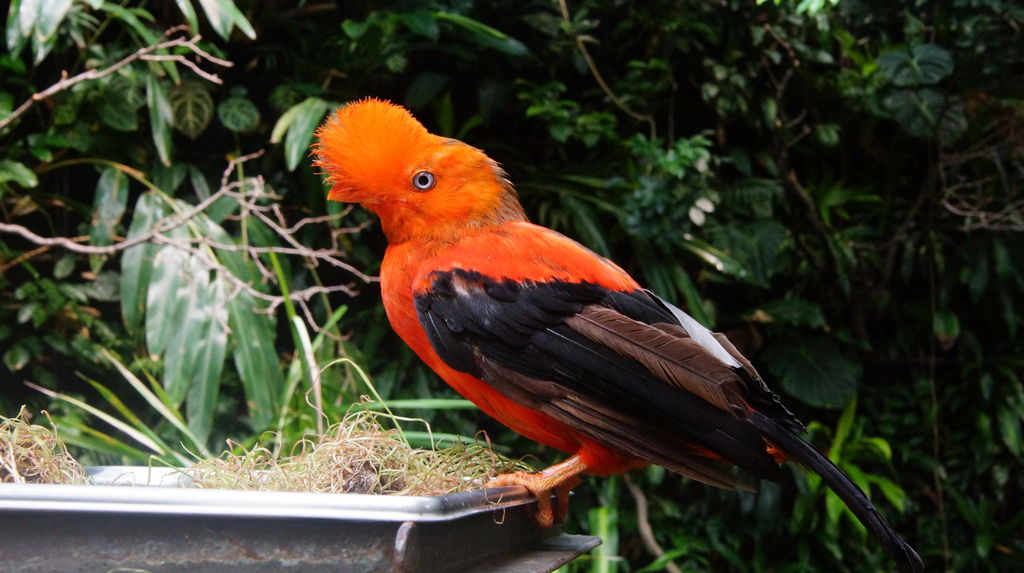
7. Andean cock-of-the-rock – gallito de las rocas
Peru’s national bird. The males are a ridiculous, glowing orange-red with a crest that hides their beak, and they gather in groups in the cloud forests to dance, bob and squawk at the females. Gallito = little rooster.

8. Spectacled bear – oso de anteojos
The only bear native to South America, living in the Andes from Venezuela down to Bolivia. Anteojos means glasses – from the pale rings round its eyes. British readers – you already know one. Paddington came from “darkest Peru”, and he’s usually described as a spectacled bear!

9. Pink river dolphin – delfín rosado or bufeo
A freshwater dolphin from the Amazon and Orinoco that gets pinker as it ages. Its neck bones aren’t fused like other dolphins’, so it can turn its head and weave through flooded forest. In Amazon legend it turns into a handsome man at night and seduces people at village parties. As you do.

10. Vicuña – vicuña
The wild cousin of the llama, living high in the Andes. It’s Peru’s national animal (it’s on the coat of arms) and has some of the finest wool in the world – so fine they were hunted down to a few thousand in the 1960s. Protection brought them back, and communities still round them up for shearing the old Inca way, a chaccu.
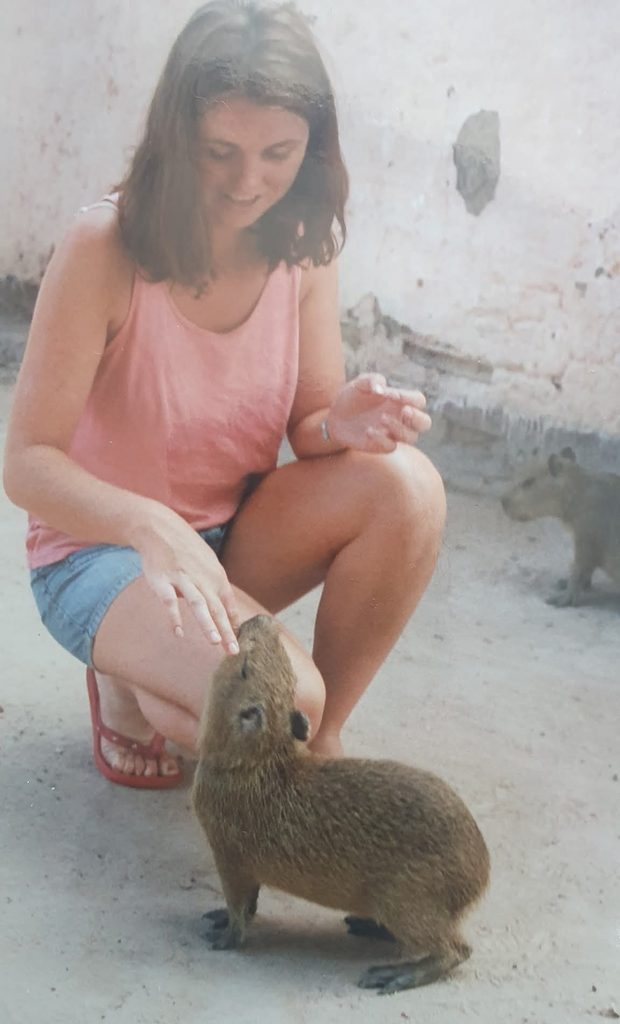
The famous ones I actually met
OK, these aren’t niche. But they’re mine!!
- Anaconda (anaconda) – the one round my neck in the Venezuelan sabana. Green anacondas are the heaviest snakes on the planet.
- Piranha (piraña) – I went piranha fishing in Venezuela, and actually caught some! They’re freshwater fish, about 15–25 cm long, with teeth exactly as sharp as you’ve heard.
- Capybara – the world’s biggest rodent, and I saw loads in Venezuela, where they’re called chigüires. In Argentina it’s carpincho. Same animal, different country – which is pretty much my whole teaching philosophy in one sentence.
- Caiman (caimán, or baba in Venezuela) – I have a photo of me holding one. I’m not sure what I was thinking.
- Southern right whale (ballena franca austral) – not unique, as confessed above, but watching them breach off Península Valdés in Patagonia is still one of the best things I’ve ever seen.
- Monkeys at Sugarloaf Mountain (Pão de Açúcar), Rio de Janeiro – the place is full of them.
- Andean condor (cóndor andino) – national symbol of Bolivia, Chile, Colombia and Ecuador, with a wingspan of over 3 metres. I’ve seen many. Mostly when I was working as a translator on horse-back rides though the Andes mountains in Argentina. I wrote more about those rides in From the Andes to Andalucía: my journey in immersive Spanish learning.
Teaching animals in Spanish
Animals are one of the easiest ways into Spanish for kids – the names are often half-familiar (jaguar, anaconda, cóndor), and the odd ones (pichiciego, chigüire) are the ones they remember. We use exactly this kind of thing in our home education Spanish classes, and there are more free bits in our kids’ resources.
FAQ’s
What is the rarest animal native to South America?
Rarity changes as populations recover, but the pink fairy armadillo is one of the least-seen – it lives underground and so little is known about it that scientists can’t say how many there are.
What animals are only found in South America?
From this list: the pink fairy armadillo and mara (Argentina only), the pudú, Darwin’s frog, the spectacled bear, the maned wolf, the vicuña and the pink river dolphin.
What’s the Spanish for capybara?
Depends where you are – chigüire in Venezuela, carpincho in Argentina, capibara in Spain.
So – how many of these had you actually heard of before today? And which one would you most want to see in the wild?