There’s a moment I think about often.
My daughter — still small, still figuring out the world — is mid-sentence in Spanish, completely unselfconscious, switching effortlessly between languages the way other children switch between shoes. She didn’t study her way to that. She lived her way to it.
I’d spent years watching the same thing happen with adults in Mendoza: people who’d arrived nervous, phrasebook in hand, and left three weeks later holding conversations they hadn’t believed themselves capable of. Not because we’d drilled them. Because we’d put them somewhere Spanish was the only option that made sense. That’s immersive Spanish learning in its purest form — and it’s the experience that shapes everything we do at Adventures in Spanish today.
That belief — that language sticks through living, not memorising — is the thread that runs from the Andes to Andalucía, and through every course and trip we run today.
Fifteen Years of Immersive Spanish Learning in Mendoza
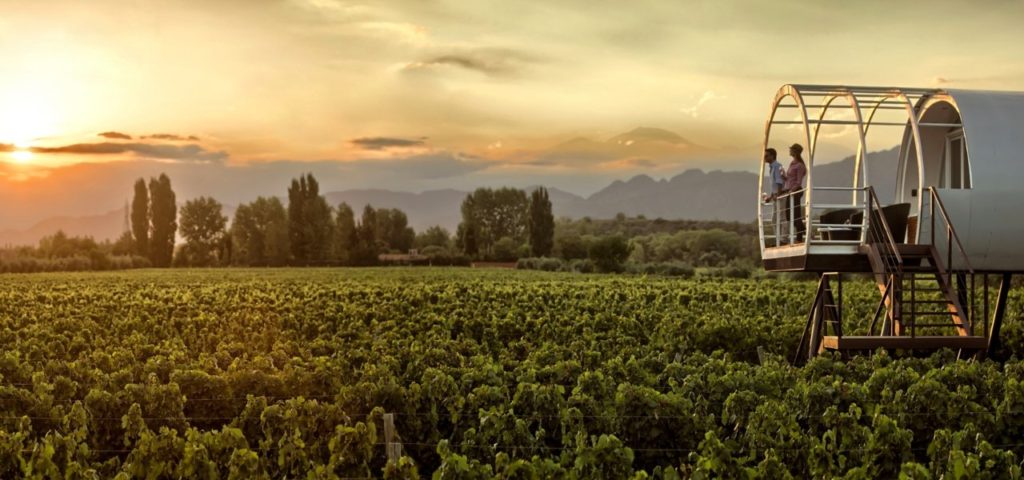
I ran The Grapevine Wine Tours in Mendoza for fifteen years. For anyone who hasn’t been: Mendoza sits at the foot of the Andes, surrounded by vineyards, with the kind of light in the late afternoon that makes everything look like it’s been put there deliberately. It’s a place that tends to rearrange your priorities.
We crafted personalised travel experiences for people coming from all over the world — wine lovers wanting to explore the Malbec heartland, couples getting married amongst the vines, honeymooners who wanted something more memorable than a resort. But the work I found most meaningful was always the student immersion trips.
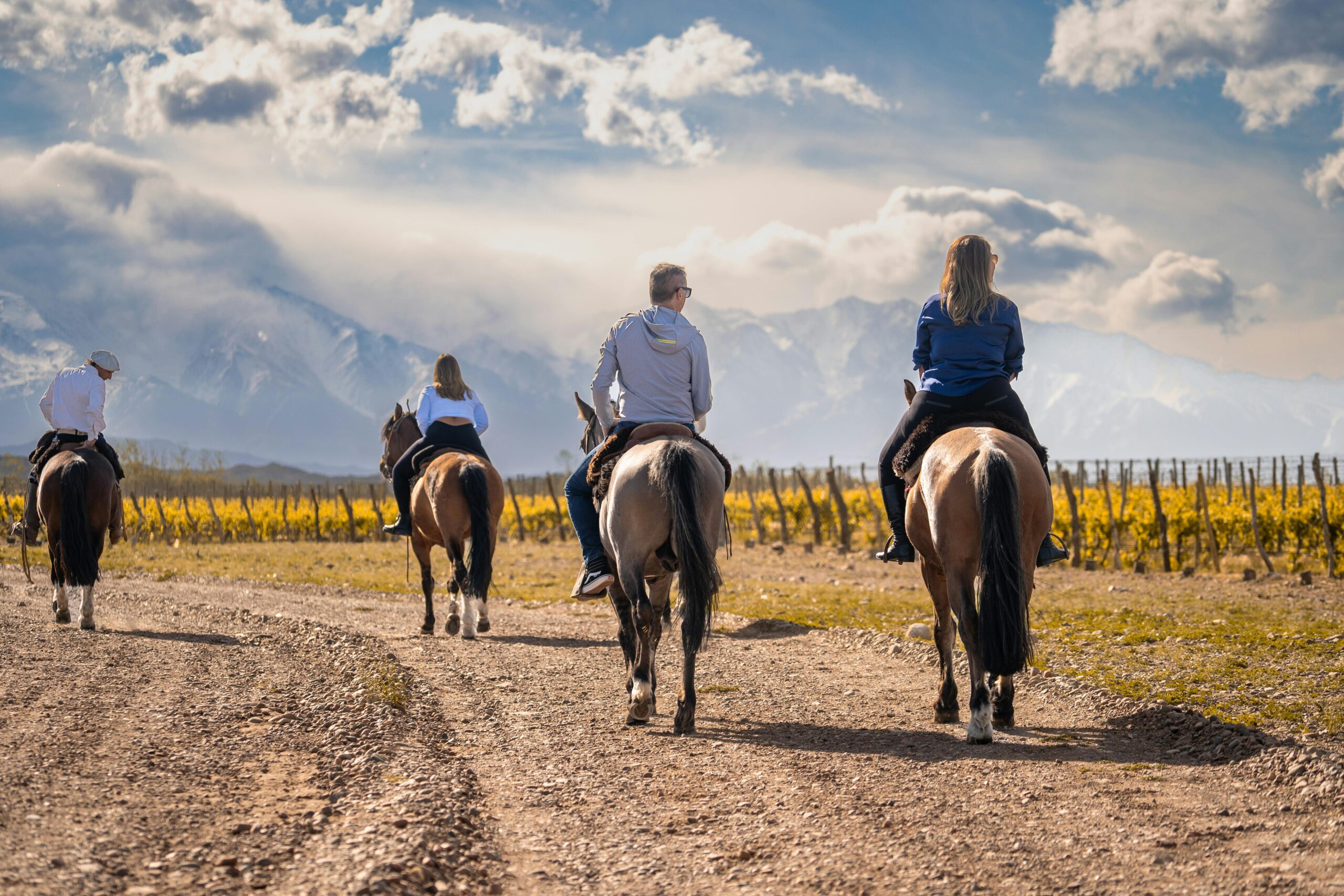
Groups would arrive from the USA — students at various stages of their Spanish — and we’d build an immersive Spanish learning programme around getting them out of any classroom setting as quickly as possible. Horse riding through the Andean foothills. Wine tastings where they had to ask questions in Spanish to get answers. Afternoons in the city plaza, just talking to people. The curriculum was real life, and Mendoza was generous with it.
What I watched happen on those trips shaped everything I’ve built since. There’s a specific kind of breakthrough that happens when someone stops translating in their head and just starts responding — when the gap between thinking and speaking closes, even briefly, for the first time. I saw it happen again and again in Mendoza. I see it happen now in Málaga.
Raising Bilingual Children in Argentina
My daughters grew up in Argentina during those years. They didn’t have Spanish lessons. They had Spanish life — school, friendships, arguments, jokes, the lot, in a language that was simply what you used if you wanted to be understood.
Watching them become bilingual wasn’t a curriculum moment. It was a hundred small moments: the first time one of them corrected my grammar, the first time they dreamed in Spanish, the first time I realised they were thinking in both languages simultaneously and simply reaching for whichever word arrived first.
I tell this story not to make a point about moving abroad — most families can’t, and shouldn’t have to. I tell it because it showed me precisely what it is that makes language actually stick: need, context, and the absence of a safety net. Real communication, where something is actually at stake.
That insight lives at the heart of the Adventures in Spanish Framework™ — Compass, Map, Adventure. The compass gives you the essential phrases that point you in the right direction. The map connects everything so it doesn’t just sit in a notebook going nowhere. And the adventure is where it all becomes real — where you stop learning Spanish and start using it.
From Mendoza to Málaga: Why We Chose Spain
When I came back to the UK after twenty years, the question I kept returning to was: how do you give children and families that same immersive Spanish experience — the real need, the breakthrough moment — without asking them to uproot their lives?
The answer I landed on was a Spanish immersion trip to Málaga.
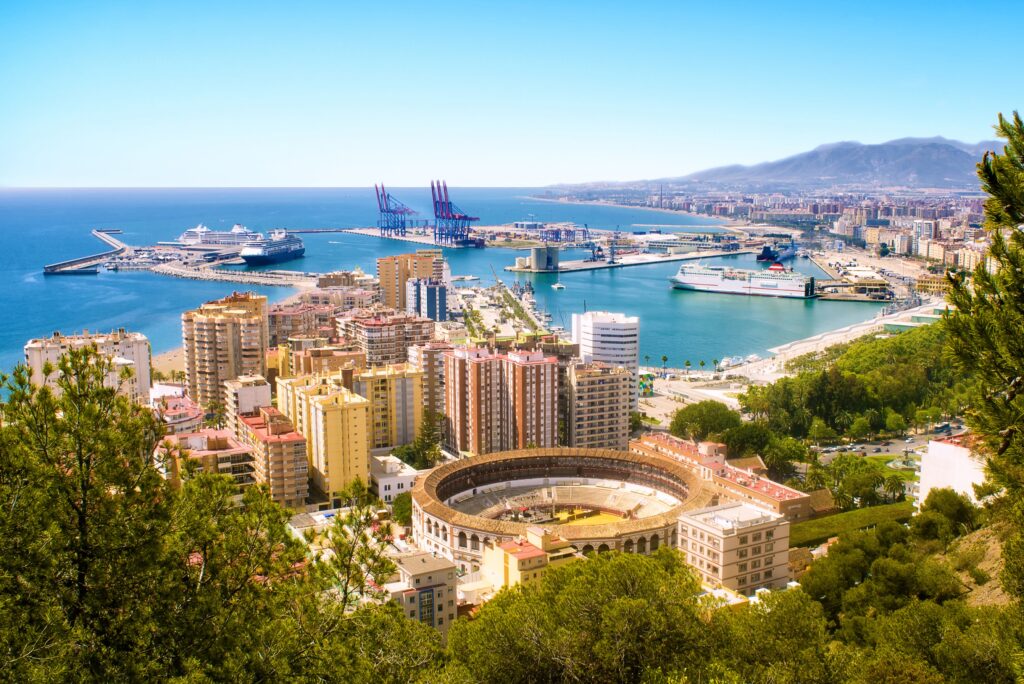
Not because it’s the obvious choice, but because it earns it. Málaga is a genuinely Spanish city — not a tourist bubble with Spanish nearby, but a place with a local market, a real neighbourhood panadería, a historic old town where people live and work and go about their days in Spanish regardless of who’s watching. It has a language school I trust, partners I’ve built real relationships with, and a rhythm that lends itself to exactly the kind of day I used to build in Mendoza: structured input in the morning, real-world use in the afternoon.
Our groups are small — never more than eight children — and every day is built around the same principle I learned in Argentina: give them the language they need, then put them somewhere they genuinely need to use it. Ordering in the market. Navigating the old town. Realising, often for the first time, that they can actually hold a conversation. If you’re wondering whether a week is really enough to make a difference, here’s my honest answer.
The magic of those moments hasn’t changed since Mendoza. It’s just moved continent.
Not sure whether a Spanish immersion trip or a worldschooling hub is right for your family? Here’s an honest comparison.
What This Means for Home Educated Children Learning Spanish
I’m not going to tell you a week in Málaga makes a child fluent. It doesn’t, and anyone who promises that is selling something I’m not comfortable selling.
What it does is something arguably more valuable, especially for home-educated children and worldschooling families: it makes Spanish feel real. It turns a language that’s been living in books and lessons into something with texture and noise and actual people attached to it.
And that shift — from Spanish as a subject to Spanish as something you genuinely use — is often the thing that makes everything afterwards finally stick.
If you’d like to know more about how our Málaga trips are structured, what a typical day looks like, and whether it’s the right fit for your child’s level, you can find the full details on our Spanish Immersion Trip page.
Or if your child is earlier in their journey, our Spanish for Home Educators programme is where most of our Málaga families start — building the Spanish foundation that makes a trip like this land properly when the time comes.
Because the Andes taught me this: the adventure only works if you’ve got a compass and a map first.
