If you search “summer Spanish learning” right now, you’ll find dozens of posts telling worried schooled-parents how to stop their child losing ground over the holidays — vocabulary games, “summer slide” warnings, ways to sneak in 15 minutes of practice before the beach.
That’s not really your problem.
For home educated families, summer doesn’t mean a sudden stop in routine, a school gate closing, or six weeks of trying to claw back what’s been lost. Most of the year already looks a bit like this for you. So the real question isn’t “how do we avoid backsliding” — it’s “how do we use this stretch of extra flexibility well?”
And the honest answer is: summer is one of the best times of the whole year for home educated children to make real progress with Spanish. Here’s why.
You’re not fighting a school timetable
For schooled families, summer Spanish is squeezed in around camps, holidays, and a packed final term. For home educators, it’s the opposite — the usual structure of your week often loosens up, which means there’s more room to actually go deeper into something rather than just maintaining it.
No fitting lessons in around homework. No competing with six other subjects for attention that week. Just more space to let Spanish breathe.
Longer days mean more natural exposure
This sounds small, but it adds up. Long summer evenings, more time outdoors, more downtime that isn’t already earmarked for something else — all of this creates natural opportunities to bring Spanish into everyday life without it feeling like “extra work.” A Spanish audiobook on a long car journey, cooking a Spanish-inspired dinner together, switching a film to Spanish audio one evening — these little moments stack up far more easily when the day isn’t already full.
It’s the perfect run-up to a new term
If your child is heading into a new stage in September — moving from KS2 into KS3, starting GCSE Spanish, or simply picking up where they left off — summer is the obvious moment to build confidence before that jump, rather than scrambling to catch up once term’s already underway.
This is exactly why so many of our home educating families use the summer months for a structured push: not because they’re worried about falling behind, but because they want their child to walk into September already feeling capable and confident.
Real practice doesn’t need a passport
You don’t need a flight to Spain to get this benefit (though if you want one, June is exactly when families start booking our Spanish Immersion Trip to Málaga for the following year). A consistent run of lessons, real conversation practice, and a bit of structure over a few weeks can do more for a child’s confidence than scattered lessons across a busy term ever will.
That’s the real opportunity hiding inside “more free time” — not just avoiding slide, but making faster progress than the rest of the year usually allows.
Where to start this summer
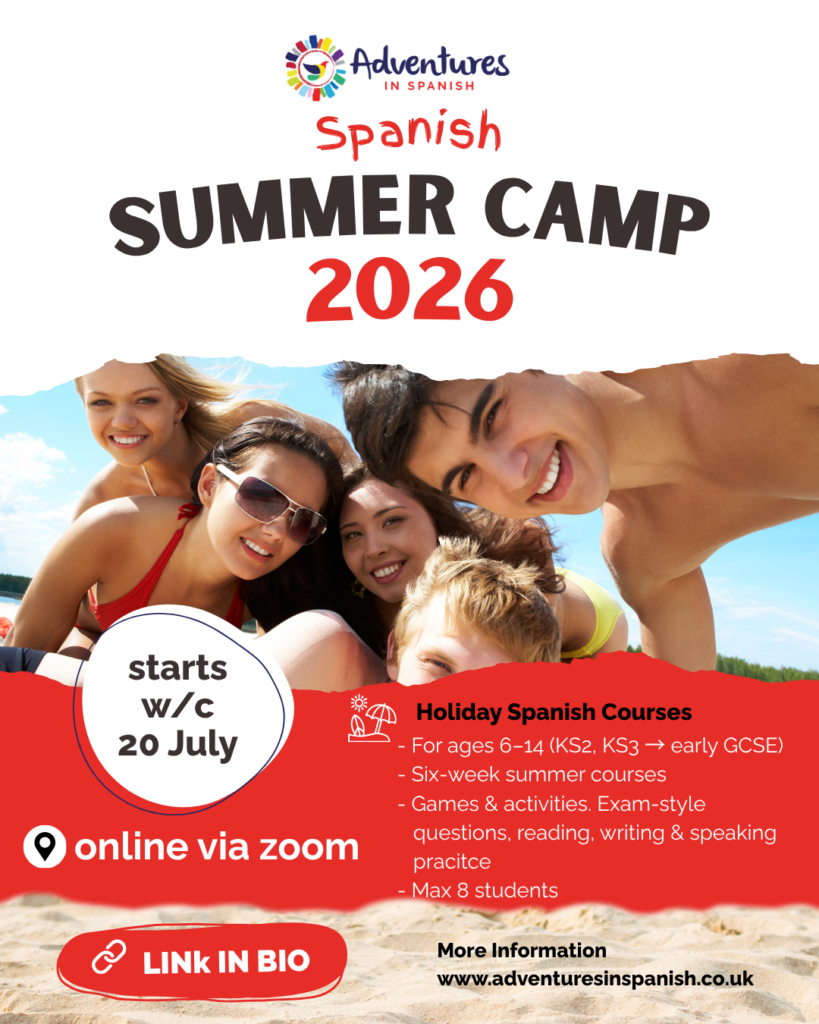
If you’d like that structure without having to plan it yourself, our Spanish Summer School runs as a live, 6-week online course this July — small groups (max 8 children), taught by experienced tutors, with separate classes for:
- KS2 (ages 6–11) — Thursdays, 10–10:45am
- KS3 (ages 11–14) — Thursdays, 11am–12pm
- GCSE Spanish — Tuesdays, starting 21st July, designed specifically to keep GCSE skills sharp and build speaking confidence before exams
Spots are limited to 8 children per class, and the course starts the week of 20th July — so if September confidence is the goal, summer is genuinely the moment to start, not an afterthought once term’s already back.
See the full Spanish Summer School schedule and book your child’s place →