
In October 2015, I met children’s author Jude Lennon. We got talking about something that I couldn’t stop thinking about: had I ever found a decent bilingual book about Día de los Muertos – the Day of the Dead?
I hadn’t. I’d been looking for ages. The ones you could get in the UK were either really expensive or (I’ll be kind) not very good. Then I found out that Monarch butterflies finish their enormous migration to Mexico on the 1st and 2nd of November. The very days of the festival!! In Mexico, some people believe the butterflies carry the souls of loved ones coming home. Well. That was it. That had to be our book.
A year later we were launching ¿Ya Estoy Llegando? at Sandbach Library, surrounded by children doing butterfly crafts. And every October since, someone asks me the same thing: “So is Day of the Dead basically Mexican Halloween?”
Short answer – no. Long answer – this post.
Halloween in Spanish-Speaking Countries
Halloween has well and truly arrived in the Spanish-speaking world – mostly through kids, films and shops. In Spain, children knock on doors shouting ¡truco o trato! (trick or treat – literally “trick or deal”, which I love).
Colombia goes even further. There, 31st October is also Día de los Niños (Children’s Day), and kids parade through shopping centres in costume chanting “¡Triki triki Halloween, quiero dulces para mí!” – trick or treat Halloween, I want sweets for me! I’ll never forget one Halloween in Bogotá, before my children were born – I couldn’t take my eyes off the kids parading round in their costumes. They were fantastic!!
If you’re heading to a fancy-dress party abroad (or just want to liven up the school run), here’s what you need:
| Spanish | English | When you’d use it |
| ¡Feliz Halloween! | Happy Halloween! | Simple, cheerful, and gets the job done. |
| ¿Truco o trato? | Trick or treat? | On the doorstep in Spain |
| disfrazarse | to dress up | Me voy a disfrazar de bruja – I’m going to dress up as a witch |
| el disfraz | Costume | ¿De qué vas disfrazado? – What are you dressed up as? |
| la calabaza | Pumpkin | Carving night |
| la bruja / el fantasma / el vampiro | witch / ghost / vampire | Naming the costumes at the door |
| los dulces (Spain: las chuches) | Sweets or candy. | Counting the haul afterwards |
| Voy a una fiesta de disfraces | I’m going to a fancy-dress party | Telling everyone your plans |
| Me da miedo | It scares me | When someone jumps out in a terrifying mask |
What Makes Día de Muertos Different?
Halloween is about fear. Día de Muertos is about family. Mexican families set up ofrendas (altars) at home and in cemeteries, piled with photos, candles, sugar skulls and the favourite food and drink of the people they’ve lost. Then they wait for them to come home.
I’ll admit, the first time I read about picnics on graves, I thought it sounded a bit morbid. It isn’t. It’s music, chatter, the smell of fresh bread – more like a family reunion than a funeral. UNESCO even added it to its list of the world’s Intangible Cultural Heritage in 2008.
The dates matter too:
- 31st October – the night the gates open
- 1st November – the spirits of children (los angelitos, the little angels) come home
- 2nd November – the adults follow
Oh, and that huge Mexico City parade you see on Instagram? It only started in 2016 – after the opening scene of the James Bond film Spectre showed one that didn’t actually exist. Tourists turned up expecting a parade… so Mexico City made one!!
| Spanish | English | What it is |
| la ofrenda | offering / altar | The heart of the celebration, built at home |
| el cempasúchil | Mexican marigold | Bright orange petals that guide spirits home (it’s a Nahuatl word) |
| la calavera de azúcar | sugar skull | Decorated sweet, often with a name written on the forehead |
| el pan de muerto | “bread of the dead” | Sweet bun topped with dough “bones” |
| el papel picado | punched paper | Colourful tissue-paper banners strung over the altar |
| La Catrina | the elegant skeleton lady | Started as a cartoon by José Guadalupe Posada mocking the wealthy |
| la calaverita | little skull poem | A funny rhyme teasing a living friend about their “death” – all affection |
And What About Spain?
Here’s the bit most posts miss. Spain doesn’t traditionally celebrate Día de Muertos – that’s Mexican. Spain has Día de Todos los Santos (All Saints’ Day) on 1st November, and it’s a bank holiday.
It’s quieter. Families visit cemeteries to clean graves and leave flowers. But there’s food, of course (this is Spain):
- huesos de santo – “saints’ bones”, little marzipan tubes filled with sweet egg yolk
- buñuelos de viento – “wind fritters”, light doughnut puffs, sometimes filled with cream
- castanyada in Catalonia – roast chestnuts and panellets (pine-nut marzipan sweets)
In plenty of Spanish theatres, the classic play Don Juan Tenorio is still performed around this date – a tradition that goes back to the 1800s. And in Galicia they celebrate Samaín, a Celtic festival with carved turnips and pumpkins. Wales has Calan Gaeaf, so we’d fit right in.
Want to see it for yourself? Our Málaga immersion trip next October falls right around Todos los Santos. We visit a local cemetery to see the decorations – flowers everywhere, families tidying graves, a calm you don’t expect – and you’ll spot huesos de santo in the bakery windows on the way back.
Sharing Día de Muertos With Your Children
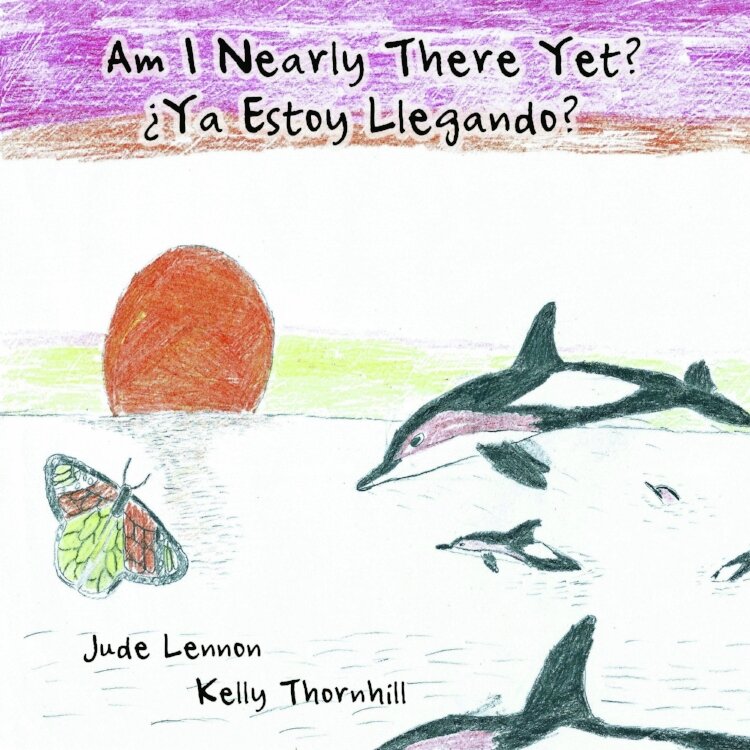
This is where Frida comes in. ¿Ya Estoy Llegando? (Am I Nearly There Yet?) follows a day-dreaming Monarch butterfly who falls asleep in butterfly school, misses the directions and has to find her own way to Mexico in time for the celebrations.
The children in my Spanish classes did the illustrations – and the front cover was drawn by Daniel Bassey, who was 13 at the time. I’m still ridiculously proud of that.
It also gently opens up a conversation about losing people we love, which is exactly what Día de Muertos is for. Every copy comes with a free mp3 of the story read in Spanish and English.
- Buy it on Amazon
- Or get a signed copy with a personalised message in Spanish – lovely as a gift
Want to go deeper? My complete guide to the Day of the Dead covers where the festival comes from, what goes on an ofrenda, who La Catrina really is – plus sugar skull and pan de muerto recipes, crafts and film ideas (Coco is still a winner in our house).
Quick Answers
Is Day of the Dead the same as Halloween? No. Halloween is about scares and costumes. Día de Muertos is a Mexican celebration of family members who have died – joyful, not frightening.
When is Día de Muertos? 31st October to 2nd November, with 1st November for children and 2nd November for adults.
Do they celebrate Halloween in Spain? Yes, especially children – but the traditional holiday is Día de Todos los Santos on 1st November.
What do you say on Día de Muertos? You’ll hear ¡Feliz Día de Muertos! People also talk about poner la ofrenda – setting up the altar.
Pumpkins or Marigolds?
Confession time – at home in Wales, we usually just carve pumpkins (I know, I know!!). But every October I bring Día de Muertos to life for the children in my Spanish classes, and it’s one of my favourite lessons of the whole year.
So which camp are you in this year? Trick-or-treating, building an ofrenda, or tucking into huesos de santo? Tell me in the comments – I’d love to know!!
