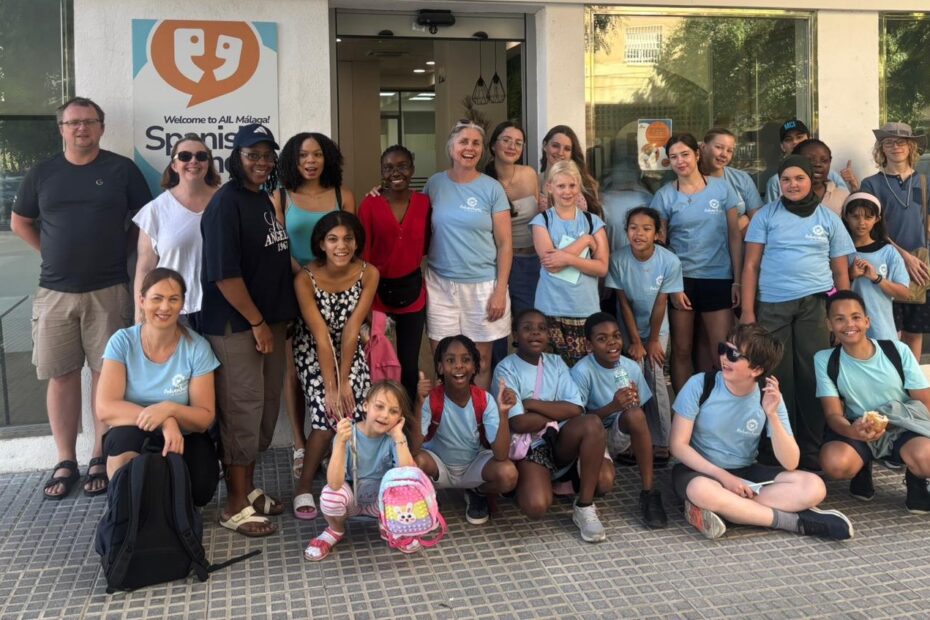
If you’ve ever wondered what your child would actually do on one of our Spanish immersion trips, here’s the honest answer: they’ll live the language from breakfast to bedtime—and love every minute of it. In this blog post I walk you through a typical day, hour by hour, so you can picture your child right there, confidently ordering their desayuno and chatting away with new Spanish-speaking friends.
Morning Magic: Spanish Lessons by the Sea
The day begins with something quite special—Spanish lessons in our beachfront school. Yes, really. Think sea breeze, sunshine, and a classroom that feels nothing like school back home.
After breakfast with their host family (usually a simple spread of tostadas, fruit, and something sweet), the children ease into their morning Spanish lessons. But don’t picture rows of desks and grammar drills. Our approach to interactive Spanish learning is all about speaking, moving, and laughing.
Games, role-play, songs, and real-life scenarios take centre stage. One moment they’re “ordering” food in a café, the next they’re acting out directions or describing what they’re wearing. It’s practical, confidence-building, and designed especially for children on a Spanish immersion trip for beginners.
By mid-morning, something clicks. We head over to the local panadería or supermercado for mid-morning snacks and we see it—that moment where your child stops translating in their head and just… speaks. It’s quite something.
Can Children Really Learn Spanish at the Market and Park?
Short answer: yes—and this is where the magic really happens.
Late morning, we head out into the local community. This is real-world Spanish practice, and it’s often the highlight of the day.
At the market, children might ask for fruit, handle money, or chat with friendly stallholders. In the park, they’ll do a questionaire, play games with local children, learning phrases they’ll never find in a textbook.
It’s messy, unpredictable, and completely brilliant.
This kind of Spanish language immersion for kids builds confidence faster than anything else. They’re not just learning Spanish—they’re using it with purpose.
And the best part? They don’t even realise how much they’re learning.
Afternoon Adventures: Culture, Food, and Fun
After lunch and a bit of downtime (because even the most enthusiastic learners need a breather), the afternoons are all about cultural experiences.
Depending on the day, this could mean:
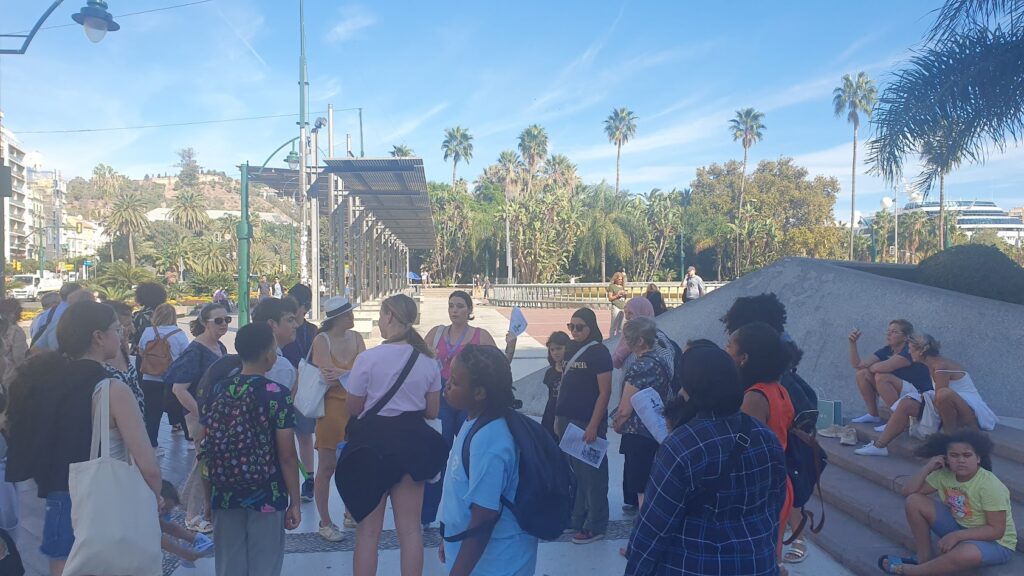
- A relaxed city tour spotting landmarks and practising new vocabulary
- A Spanish cooking session—think simple dishes they can recreate at home
- Ice cream outings (purely for “educational purposes,” of course)
- Churros and hot chocolate (a firm favourite)
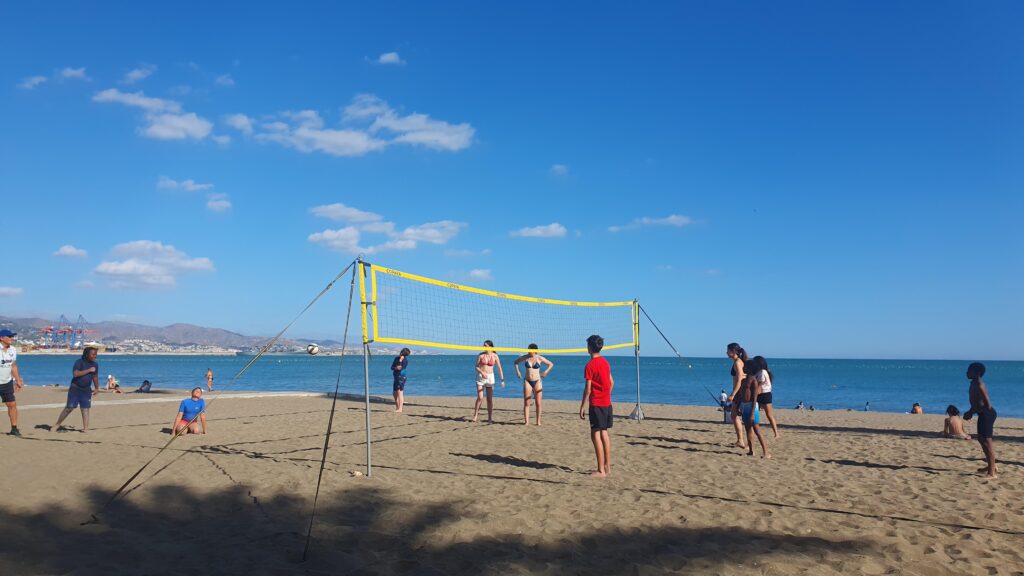
- Or sports on the beach, where Spanish naturally becomes the language of play
This is where the trip shifts from “learning Spanish” to living in Spanish.
Evening Reflections: Confidence Grows Quietly
As the day winds down, there’s time to reflect—often informally, over churros or during a relaxed group chat.
“What new word did you use today?”
“Who did you speak to?”
“What felt easier than yesterday?”
These small moments matter. They help children recognise their progress and build that all-important confidence.
By bedtime, they’re tired—but it’s the good kind of tired. The kind that comes from a full day of doing something new, exciting, and just a little bit brave.
A Spanish immersion experience for children isn’t about perfection. It’s about progress, confidence, and connection.
And now you can probably picture it, can’t you?
Your child, chatting away in Spanish, sandy feet, ice cream in hand—learning without even realising it.
