


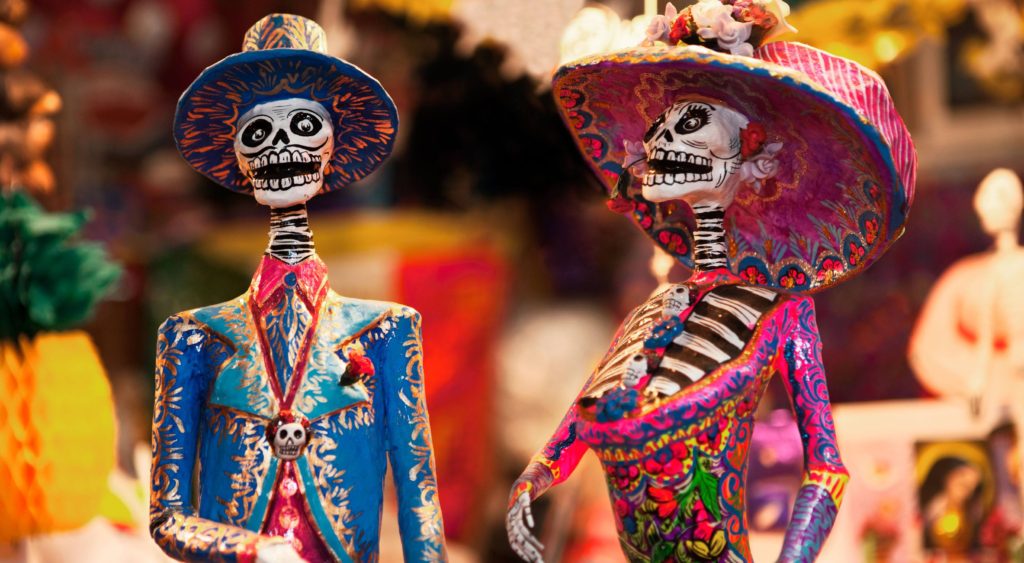
In this blog post, we embark on an enchanting exploration into the rich history and captivating customs behind Mexico’s Day of the Dead festival. As we delve into this extraordinary cultural extravaganza, be prepared to uncover mesmerizing tales, discover exquisitely crafted altars adorned with marigolds and sugar skulls, and immerse yourself in a world where death is not feared but celebrated as a joyful reunion with departed loved ones.
Welcome, wanderers and curious souls, to a journey that will transport you to the vibrant streets of Mexico, where ancient traditions come alive in an explosion of colors and celebration. So grab your metaphorical passports as we venture deep into the heart of Mexican culture to unravel the secrets behind one of humanity’s most unique and awe-inspiring festivals. ¡Vámonos!
Introduction to the Day of the Dead Festival in Mexico
El Día de los Muertos, (The Day of the Dead) is one of the most iconic and beloved festivals in Mexico. This vibrant celebration takes place every year on November 1st and 2nd, coinciding with the Catholic holidays All Saints’ Day and All Souls’ Day. It is a time for Mexicans to honor their deceased loved ones and celebrate the cycle of life and death.
While it may seem similar to Halloween at first glance, the Day of the Dead has its own unique traditions and customs that are deeply rooted in Mexican culture. This festival is a blend of indigenous rituals and Catholic beliefs, making it a truly fascinating cultural phenomenon.


History of the Day of the Dead Festival
The origins of this festival can be traced back thousands of years to pre-Columbian civilizations such as the Aztecs, Mayans, and Toltecs. These ancient cultures had a deep connection with death and believed that death was just another part of life’s journey. They viewed death not as an end but as a continuation into another realm.
When Spanish conquistadors arrived in Mexico in the 16th century, they brought with them their Catholic traditions. The conquistadors tried to eradicate many indigenous rituals, including those related to death. However, over time these two belief systems merged together to create what we now know as Día de los Muertos.
Traditions and Customs of the Day of the Dead
One of the most fascinating aspects of El Día de Muertos festival is its rich history and customs. Each element of this celebration holds significant meaning and serves as a way for families to honor their deceased loved ones. In this section, we will explore some of the key traditions and customs that are an integral part of this special holiday.
Altars (Ofrendas)
At the heart of the Day of the Dead celebrations are altars, also known as “ofrendas” in Spanish. These elaborate displays are set up in homes or public spaces to welcome back the spirits of departed family members. They typically include photographs or portraits of loved ones who have passed away, along with their favorite foods, drinks, candles, flowers (particularly marigolds), sugar skulls, and personal belongings. The belief is that these items will help guide their souls back to earth for one night to be reunited with their living relatives.
The construction of these altars is a highly personal and symbolic act. Each altar is unique and reflects not only the personality but also the memories shared by those who build it. The altar usually consists of three levels, representing heaven, earth, and purgatory. It is decorated with colorful papel picado (handcut tissue paper), fresh flowers such as marigolds (cempasúchil), candles (velas), incense burners (copaleros), fruits like oranges and bananas, traditional food items like pan de muerto (bread of dead) and sugar skulls (calaveras de azúcar).


Each element on the altar has its specific symbolism. For example:
- Marigolds symbolise the element of earth, are believed to guide spirits back home with their strong scent and vibrant color and scent.
- Candles represent fire.
- Calaveras (Skulls) represent the relatives for whom the offering is made.
- Water represents the purity of the soul.
- Paper symbolizes wind.
- Salt purifies.
- Bread symbolises fraternity.


Las Calaveras
One of the most iconic and recognizable symbols of Mexico’s Day of the Dead festival are calaveras, or skulls. These intricately decorated skulls can be seen everywhere during the festivities, from colorful altars to festive costumes.
The most common type of calavera used in Day of the Dead celebrations is the sugar skull. These brightly colored skulls are often made out of sugar paste or clay and adorned with intricate designs using icing or paint. The decorations on sugar skulls vary widely but typically include flowers, hearts, crosses, and other traditional patterns. They also often feature names or initials written on them, representing specific individuals who are being remembered.
La Catrina (Iconic Skeleton Figure)
La Catrina, also known as the “elegant skull” or the “dapper skeleton,” is one of the most recognizable symbols of Mexico’s Day of the Dead festival. This iconic figure has become synonymous with the holiday and can be seen in various forms such as sculptures, costumes, paintings, and even tattoos.
But who is La Catrina and what is her significance in Mexican culture?
Originating from a zinc etching by artist José Guadalupe Posada in the early 1900s, La Catrina was initially created as a satirical representation of wealthy Mexican women who imitated European fashion trends at the time. Posada used this character to mock their pretentiousness and remind them that death does not discriminate between social classes.
However, it was not until decades later when muralist Diego Rivera featured La Catrina in his famous painting “Dream of a Sunday Afternoon in Alameda Park” that she became an integral part of Mexico’s cultural identity. Rivera’s depiction showed La Catrina dressed in high society clothing, holding hands with other skeletons representing people from all walks of life. This symbolized how death unites everyone regardless of their status or wealth.
Today, La Catrina is no longer just a satirical figure but has evolved into a beloved icon that represents both death and life. She embodies the idea that death is not something to be feared but rather celebrated as an inevitable part of life. As such, she has become an essential element of Day of the Day Celebrations.


The migration of the Monarch Butterfly
The Monarch butterfly (La Mariposa Monarca) are believed to hold the spirits of the departed in Mexico’s mountains, where they arrive every winter. Their arrival coincides with el Día de los Muertos. Monarchs that live in the eastern states of North America (usually east of the Rocky Mountains) will migrate to Mexico and hibernate in Oyamel fir trees. They arrive in Mexico on the same dates every year; 1st & 2nd November – el Día de los Muertos.
The Monarch butterfly is the only butterfly known to make a two-way migration as birds do. Unlike other butterflies that can overwinter as larvae, pupae, or even as adults in some species, Monarchs cannot survive the cold winters of northern climates.


Teaching resources for el Día de los Muertos here > The Day of The Dead Festival